Choosing the best wireless speakers depends on where you listen and how often you move them. Home listeners usually benefit from Wi-Fi, while travelers need battery life and water resistance. Party speakers need stronger output, deeper bass, and tougher construction.
For most U.S. homes, the Sonos Era 100 offers the strongest balance of sound, connectivity, and size. The JBL Charge 6 makes more sense when portability matters most. Buyers wanting spatial audio should consider the Sonos Era 300.
Quick answer: The Sonos Era 100 is our overall recommendation for home listening because it combines Wi-Fi, Bluetooth, AirPlay 2, and compact dimensions. The JBL Charge 6 suits portable use better. Sonos Era 300 is the stronger choice for Dolby Atmos music, while JBL Xtreme 5 fits larger gatherings.
Best Wireless Speakers Compared at a Glance
| Speaker | Best for | Connectivity | Battery | Approx. U.S. price* |
|---|---|---|---|---|
| Sonos Era 100 | Best overall for home | Wi-Fi, Bluetooth, AirPlay 2 | Plug-in | $219 |
| JBL Charge 6 | Best portable value | Bluetooth | Battery powered | Around $150 |
| Sonos Era 300 | Best spatial audio | Wi-Fi, Bluetooth, AirPlay 2 | Plug-in | $499 |
| Bose SoundLink Max | Best premium portable | Bluetooth | Up to 20 hours | $399 |
| Marshall Kilburn III | Best battery life | Bluetooth, AUX | 50+ hours claimed | Around $379 |
| Sonos Roam 2 | Best compact Wi-Fi option | Wi-Fi, Bluetooth, AirPlay 2 | Up to 10 hours | $179 |
| JBL Xtreme 5 | Best for parties | Bluetooth, USB-C | Up to 24 hours | $399.95 |
*Prices were checked against current U.S. listings and recent reviews in October 2026. Retail promotions can change them quickly.
How We Chose These Speakers
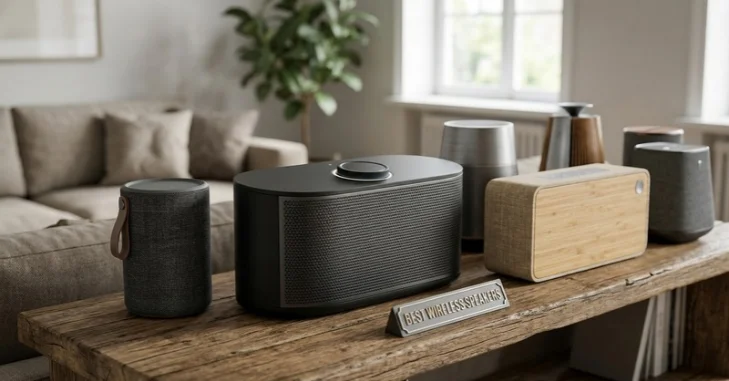
Best Wireless Speakers compared current manufacturer specifications with recent independent testing from established audio publications. Sound quality, connection options, portability, durability, battery performance, and U.S. availability received the most weight. We also considered whether each model solves a clearly different buyer need.
This approach avoids ranking seven similar Bluetooth boxes with slightly different prices. Wi-Fi models deserve consideration because they can stream without keeping your phone constantly connected. Portable Bluetooth products still win when you regularly move between rooms, patios, parks, and trips.
1. Best Wireless Speakers: Best Overall for Most Homes
The Sonos Era 100 is our top home pick because its connection options cover most modern listening habits. It supports Wi-Fi 6, Bluetooth 5.3, and Apple AirPlay 2. Sonos currently lists it at $219 in the United States.
Two angled tweeters help create stereo separation from one compact cabinet. A larger woofer than the older Sonos One handles the lower frequencies. You can also pair two Era 100 units for a wider stereo setup.
Pros.
- Wi-Fi and Bluetooth in one compact speaker
- Apple AirPlay 2 support
- Works within Sonos multiroom systems
- Stereo pairing is available
- Compact enough for desks and shelves.
Cons
- Requires wall power
- Line-in needs a separate adapter
- Not designed for outdoor exposure.
A stable network matters when you depend on Wi-Fi streaming throughout your home. TechZena’s guide to choosing between a Wi-Fi extender and booster explains common coverage problems. TechZena’s Wi-Fi extender vs booster guide
2. JBL Charge 6: Best Portable Choice for Most People
The JBL Charge 6 is an easier recommendation when your speaker regularly leaves the house. Several current expert guides rank it among 2026’s strongest portable choices. Recent U.S. pricing has been around $150, although promotions vary.
Its rugged design suits patios, vacations, and outdoor listening better than plug-in home speakers. RTINGS and other testing publications consistently place JBL models among leading Bluetooth choices. The main compromise is losing the richer multiroom flexibility that Wi-Fi systems provide.
Pros.
- Portable design
- Strong independent-review performance
- Better outdoor fit than home-only speakers
- Useful balance of size and output
- Widely available from U.S. retailers.
Cons
- No full Wi-Fi multiroom system
- Less room-filling than larger models
- Battery performance changes with volume.
3. Sonos Era 300: Best for Dolby Atmos Music
The Era 300 targets listeners who want spatial music rather than simple background playback. Sonos uses six positioned drivers to send sound forward, sideways, and upward. Dolby Atmos support is its defining feature.
It also offers Bluetooth, Wi-Fi, AirPlay 2, Trueplay tuning, and optional line-in connectivity. Sonos currently lists the model around $499 before temporary discounts. That price makes it a specialist choice rather than our default recommendation.
Pros.
- Dolby Atmos music support
- Wide spatial presentation
- Bluetooth and Wi-Fi
- Strong multiroom options
- Can become part of a Sonos theater system.
Cons
- Expensive for casual listening
- Needs permanent power
- Larger than the Era 100.
4. Bose SoundLink Max: Best Premium Portable Speaker
Bose positions the SoundLink Max between smaller travel speakers and full party systems. It delivers stereo sound from a carryable body and includes a removable handle. Bose currently lists it at $399 in the United States.
The company rates battery life at up to 20 hours and gives the enclosure an IP67 rating. It can also charge a phone during playback. Those features make it useful for longer outdoor sessions where smaller speakers may struggle.
Pros.
- Powerful sound for its size
- Up to 20 hours claimed battery life
- IP67 water and dust resistance
- Can charge connected devices
- Convenient carrying handle.
Cons
- High price
- Weighs 4.7 pounds
- Bluetooth focus limits home multiroom options.
5. Marshall Kilburn III: Best for Long Battery Life
The Marshall Kilburn III stands out for its exceptionally long advertised runtime. Marshall claims more than 50 hours of portable playback. Its IP54 rating offers protection from dust and splashes, though it is not fully waterproof.
Recent independent testing also praises its broad sound and physical controls. Battery results can differ substantially from manufacturer claims under testing conditions. Buyers should treat the 50-hour figure as a maximum claim rather than a guaranteed result.
Pros.
- 50+ hours advertised playback
- Distinctive physical controls
- Wide stereo presentation
- AUX input included
- IP54 construction.
Cons
- Heavy for frequent travel
- Less water protection than IP67 models
- Premium pricing.
Portable electronics last longer when their batteries receive sensible charging care. TechZena’s broader explanation of battery health provides useful background on capacity and battery aging. TechZena’s battery health guide
6. Sonos Roam 2: Best Compact Wi-Fi and Bluetooth Option
The Sonos Roam 2 fills an unusual middle ground between travel speaker and home network speaker. It connects through Bluetooth outdoors and Wi-Fi when you return home. AirPlay 2 and automatic Trueplay tuning add further flexibility.
Sonos rates it for up to 10 hours of playback and gives it IP67 protection. It weighs less than one pound according to the company’s specifications. The current U.S. list price is $179.
Pros.
- Wi-Fi and Bluetooth
- IP67 protection
- Lightweight body
- AirPlay 2 support
- Integrates with other Sonos products.
Cons
- Shorter battery life than several rivals
- Limited output compared with larger speakers
- Costs more than many compact Bluetooth models.
7. JBL Xtreme 5: Best for Parties and Bigger Outdoor Sound
The JBL Xtreme 5 suits buyers who value volume and bass more than easy backpack portability. TechRadar measured a substantial upgrade over its predecessor and praised its clarity and bass output. The model launched in 2026 with a U.S. list price of $399.95.
It carries an IP68 rating and offers up to 24 hours of standard playback. JBL also includes USB-C audio and Bluetooth 6.0 connectivity. Its 6.4-pound weight makes it better for planned gatherings than everyday commuting.
Pros.
- Powerful bass and output
- IP68 protection
- Up to 24 hours of playback
- USB-C audio support
- Strong option for larger gatherings.
Cons
- Heavy
- Expensive
- Too large for casual daily carrying.
Wi-Fi or Bluetooth: Which Should You Choose?
Choose Wi-Fi when the speaker will mainly stay inside your home. Wi-Fi can support multiroom playback and direct streaming through compatible services. It also avoids interruptions from ordinary phone notifications.
Bluetooth makes more sense for travel because it works without your home network. Pairing is also simple across phones, tablets, and laptops. Hybrid models such as the Era 100 and Roam 2 provide both connection types.
Home networking can become the hidden weak point in a multiroom setup. Improving coverage may help more than replacing an otherwise capable speaker. TechZena covers related consumer technology and connectivity topics across its main technology coverage. Explore more technology guides on TechZena
What Features Matter Before You Buy?
Start with your listening location rather than the largest specification number. A kitchen speaker needs different features from something used beside a pool. Outdoor use makes water resistance and battery life far more important.
Check connection support before assuming every model works with your preferred ecosystem. AirPlay 2 benefits Apple households, while multiroom platforms work best when your speakers share an ecosystem. Bluetooth remains the easiest universal option for guests.
Size also changes what a speaker can realistically deliver. Larger enclosures generally have more room for drivers, batteries, and stronger bass output. Smaller designs trade some output for easier transportation.
The same requirement-first approach works across other technology purchases. TechZena applies it when comparing devices such as cameras for different users and budgets.
Our Verdict
For most home listeners, the Sonos Era 100 provides the strongest mix of features and manageable cost. Choose the JBL Charge 6 instead when your priority is portable everyday listening. The Era 300 earns its premium when Dolby Atmos music matters.
The Bose SoundLink Max and JBL Xtreme 5 fit buyers who want larger portable sound. Marshall’s Kilburn III prioritizes long runtime and classic styling. Roam 2 makes the most sense for people already combining travel with a Sonos home system.
There is no single winner for every room, trip, or budget. The best wireless speakers match your actual listening location and connection needs. Decide where you will use the speaker before comparing smaller differences.
Frequently Asked Questions
What are the best wireless speakers for most people?
The Sonos Era 100 is our preferred home model because it combines Wi-Fi, Bluetooth, and AirPlay 2. Portable buyers should consider the JBL Charge 6 instead. Your best choice changes when waterproofing or battery life becomes more important.
Is Wi-Fi better than Bluetooth for speakers?
Wi-Fi is generally more useful for permanent home and multiroom systems. Bluetooth works almost anywhere and does not need a local network. Speakers offering both give you the greatest flexibility.
Are expensive wireless models worth buying?
Premium speakers can provide stronger output, broader connectivity, better construction, or spatial-audio features. Those benefits only matter when you will use them. A smaller Bluetooth model may offer better value for casual travel.
What water-resistance rating should an outdoor speaker have?
IP67 and IP68 models provide stronger protection than products designed only for light splashes. Always check the manufacturer’s specific limits before exposing equipment to water. Water resistance also does not mean every port can remain open while wet.
Should I buy one large speaker or two smaller speakers?
Two matching speakers can create wider stereo separation in compatible systems. One larger unit can be simpler and easier to move. Your room size, placement options, and ecosystem should decide which approach fits better.