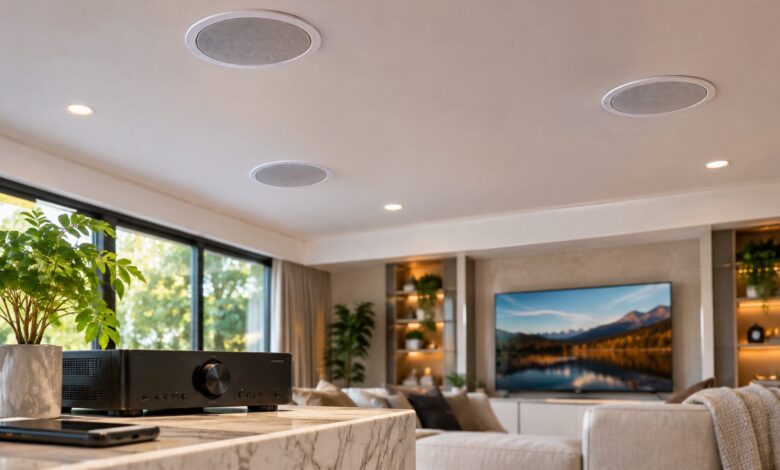
Ceiling speakers give you room-filling sound without using floor, shelf, or counter space. They work especially well for background music and overhead home-theater effects. The right setup depends on room size, placement, amplification, and installation requirements. Quick answer: In-ceiling audio works best when the speaker type matches the listening goal. Use evenly spaced pairs for music and properly positioned overhead channels for Dolby Atmos. Check amplifier compatibility, ceiling depth, wiring requirements, and obstacles before cutting any drywall.
Ceiling Speaker Basics at a Glance
| Factor | What to Know |
|---|---|
| Best uses | Whole-home music, kitchens, living rooms, home theaters, Dolby Atmos |
| Common sizes | 6.5-inch and 8-inch models are widely available |
| Power | Most traditional models need an amplifier or AV receiver |
| Wiring | Use cable approved for in-wall or in-ceiling installation |
| Placement | Depends on listening position, room dimensions, and speaker coverage |
| Key features | Aimable tweeters, moisture resistance, back boxes, stereo-input designs |
| Installation | Requires ceiling access, accurate cutouts, and obstacle checks |
| Main advantage | Strong sound coverage without visible speaker cabinets |
Key Takeaways
- Choose speakers around your room and listening purpose before comparing specifications.
- A 6.5-inch model fits many general home-audio installations.
- Larger drivers can provide greater output and fuller bass in suitable rooms.
- Most passive models require an amplifier or compatible AV receiver.
- Dolby Atmos placement should follow listening-position guidance rather than room symmetry alone.
- Check for joists, electrical wiring, plumbing, and ductwork before making a cut.
- Paintable grilles can make installed speakers blend into the room.
How Ceiling Speakers Work
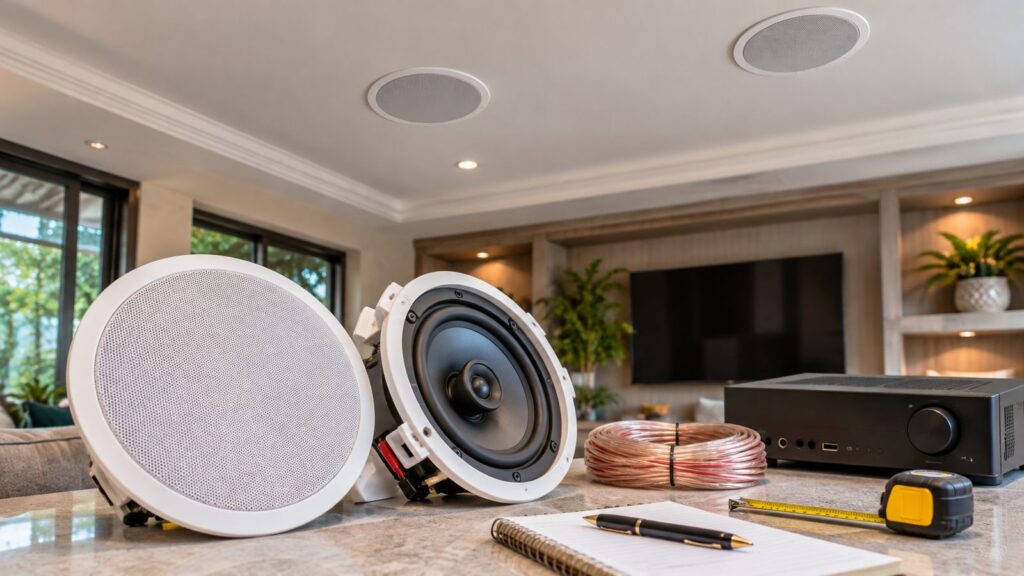
Most built-in home speakers use a woofer and tweeter mounted inside a round ceiling opening. The drivers send sound downward into the listening area. Some models let you angle the tweeter toward a sofa, table, or other listening position. Traditional in-ceiling models are usually passive rather than self-powered. Speaker wire connects each unit to an amplifier or AV receiver. The amplifier supplies the electrical power needed to produce sound. This arrangement differs from portable wireless audio equipment. TechZena’s wireless speaker guide covers self-contained products with integrated electronics. Built-in systems usually prioritize permanent installation, clean appearance, and broad room coverage.
Are In-Ceiling Models Good for Music?
Built-in speakers can work well for background music throughout kitchens, bedrooms, offices, and living areas. Their overhead position helps distribute sound without taking valuable room space. Good placement matters more than simply choosing the largest available driver. For focused stereo listening, traditional speakers positioned near ear level can create more precise imaging. Overhead audio usually feels more diffuse because sound arrives from above. Aimable tweeters can improve direction when a room needs better focus. Crutchfield recommends planning around room size and intended use before selecting speaker quantity. Smaller rooms may need only one pair for casual listening. Larger spaces can need additional speakers for consistent coverage.
How Many Speakers Do You Need?
There is no universal speaker count for every room. Ceiling height, floor area, furniture, listening volume, and speaker dispersion all affect coverage. Your intended use should decide the layout before appearance does. A small bedroom, office, or dining space may work with one stereo pair. A larger open-plan room can benefit from two pairs. Multiple speakers can reduce loud and quiet zones across a wide listening area. One stereo-input model can also serve a small space where two cutouts are impractical. These speakers reproduce both left and right channels from one location. They suit bathrooms, hallways, walk-in closets, and compact rooms.
Where Should You Place Them?
Start with the places where people will listen most often. Music systems usually benefit from balanced spacing across the occupied part of the room. Avoid clustering every speaker around lights or other ceiling fixtures. Crutchfield recommends keeping many in-wall and in-ceiling installations about 18 to 24 inches from adjacent walls. That spacing can reduce uneven sound near room boundaries. Your speaker manufacturer may provide more specific placement guidance. For stereo listening, keep the main seating position reasonably centered between the left and right channels. Symmetrical placement usually creates a more balanced presentation. Irregular rooms may require adjustments based on actual seating rather than room center.
Using Overhead Speakers for Dolby Atmos
Dolby Atmos uses height channels to add sound above the listener. Proper placement helps effects move naturally between ear-level and overhead speakers. An Atmos-capable AV receiver must also support the number of channels you plan to use. Dolby recommends layouts based on room size, speaker positions, and the primary listening location. Two overhead channels can work in smaller systems. Four height channels can provide stronger front-to-back movement when the receiver supports them. Do not position every home-theater speaker in the ceiling. Dialogue and front effects normally work better near the screen and ear level. In-ceiling units are better suited to dedicated height channels in an Atmos system.
What Speaker Size Should You Buy?
Driver diameter affects output, installation dimensions, and potential bass performance. Common residential choices include 6.5-inch and 8-inch designs. Smaller models are also available when ceiling space is limited. A 6.5-inch speaker offers a practical balance for many bedrooms and general living spaces. An 8-inch woofer may suit larger rooms or listeners wanting stronger low-frequency output. Driver size alone does not determine sound quality. Compare sensitivity, frequency response, power recommendations, cutout diameter, and mounting depth before buying. Check whether specifications describe one speaker or a pair. Retail listings sometimes use different packaging conventions.
Features Worth Checking Before You Buy
Aimable Tweeters
A pivoting tweeter lets you direct higher frequencies toward the main listening area. This feature can improve clarity when speakers cannot sit directly above listeners. It is useful in both music and theater installations. High frequencies are more directional than lower frequencies. Aiming the tweeter can help compensate for imperfect ceiling locations. It cannot fully correct poor overall placement.
Moisture Resistance
Bathrooms and covered outdoor spaces create different conditions from bedrooms or living rooms. Moisture-resistant models use materials suited to humid environments. Always follow the manufacturer’s stated installation limits. Do not assume moisture resistance means a speaker is waterproof. Steam, condensation, and direct water exposure are different risks. Check the product documentation before installing near showers or outdoor openings.
Back Boxes
A back box creates an enclosure around the rear of the installed speaker. It can help control sound passing into rooms above the ceiling. Some designs can also make acoustic performance more predictable. Back boxes require additional ceiling clearance. Measure available depth before ordering speakers and accessories. Existing pipes, ducts, and framing can reduce usable space.
Do Ceiling Speakers Need an Amplifier?
FAQ: Do ceiling speakers need an amplifier?
Most passive models need an external amplifier or AV receiver. The speaker does not contain enough electronics to power itself. Match the amplifier to the speaker manufacturer’s impedance and recommended power range. An AV receiver usually makes sense for a home-theater installation. A multi-zone amplifier can work better for music across several rooms. Your final choice depends on how many channels need independent control. Wireless streaming does not automatically remove the need for amplification. A Bluetooth receiver can add wireless input to compatible audio equipment. Passive installed speakers still need power somewhere in the signal chain.
Wiring and Installation Considerations
Use speaker cable approved for concealed wall or ceiling runs. Crutchfield recommends UL-rated CL2 or CL3 cable for typical in-wall speaker installations. Local building requirements may also affect acceptable cable and installation methods. Plan every cable route before cutting the first speaker opening. Run wiring away from hazards and identify framing beforehand. A stud finder can help locate joists and some hidden materials. Create a small inspection opening before making the full cutout when possible. Check for electrical cable, plumbing, ductwork, and structural obstacles. Never assume an empty-looking ceiling location is clear behind the drywall. Professional installation may be worthwhile when access is difficult. It can also help with complex multiroom systems or finished ceilings. Electrical or structural uncertainty should not become a trial-and-error project.
Wired vs Wireless Audio for a Built-In System
Permanent overhead speakers and portable wireless models solve different problems. A wired installation offers a clean finished appearance and centralized equipment. Wireless products offer easier relocation and usually require less construction. A whole-home system may still use Wi-Fi for music control and streaming. The network carries the audio or control data to compatible equipment. The final connection from an amplifier to passive speakers remains wired. Reliable networking becomes important when several rooms depend on network streaming. TechZena’s WiFi extender vs booster guide explains options for weak coverage areas. Fixing poor network coverage may improve a connected audio system without replacing its speakers.
Common Mistakes to Avoid
Buying equipment before measuring the ceiling is an expensive mistake. Check cutout diameter, mounting depth, joist spacing, and cable routes first. A speaker cannot perform well if it cannot be installed correctly. Another common mistake is placing speakers around ceiling fixtures instead of listening positions. Lights can influence appearance, but sound coverage should remain the main goal. Small placement adjustments can make a noticeable difference. Do not choose an amplifier by wattage alone. Check impedance compatibility and the manufacturer’s suggested power range. Channel count also matters for multiroom or Atmos installations. Finally, avoid assuming the largest driver is automatically superior. Room size and listening goals matter more than diameter alone. A well-placed smaller speaker can outperform a poorly positioned larger model.
Are Built-In Speakers Worth It?
Built-in audio makes sense when you want sound without visible boxes or floor-standing equipment. It works especially well for multiroom music and dedicated height effects. The finished room can remain uncluttered while providing broad audio coverage. The main tradeoff is installation commitment. Moving a bookshelf speaker takes seconds, while relocating an installed model requires ceiling repair. Planning therefore deserves extra attention before any holes are cut. Renters may prefer portable wireless equipment because it requires fewer permanent changes. Homeowners renovating or building may find installed audio easier to plan. New construction also provides better access for wiring and mounting hardware.
Final Buying Advice
Start with the room rather than a product page. Decide whether your goal is background music, focused listening, whole-home audio, or Dolby Atmos. Then map speaker locations and confirm available ceiling space. Next, choose driver size, directional features, moisture protection, and amplifier requirements. Check every cutout and cable route before installation begins. Specifications matter most when they solve a real room requirement. A carefully planned system can provide years of clean, unobtrusive sound. Poor placement or incompatible equipment can undermine even expensive hardware. Measure first, match the components, and install only after the entire signal path makes sense.
Frequently Asked Questions
Are ceiling speakers good for a living room?
Yes, they can work well for background music and discreet home audio. Larger living areas may need more than one pair for balanced coverage. Home theaters should keep front dialogue channels closer to screen level.
Can I use in-ceiling audio without a receiver?
Yes, if you use another compatible amplifier. Passive installed speakers always need suitable amplification somewhere in the system. Active models are different because amplification is built into their design.
Is a 6.5-inch or 8-inch speaker better?
Neither size is always better. A 6.5-inch model can suit many everyday rooms, while 8-inch designs may offer greater output. Compare mounting depth, specifications, and room needs before deciding.
Can I install built-in speakers myself?
DIY installation is possible when you understand speaker wiring and ceiling construction. You must inspect every proposed cutout before opening the ceiling. Hire a professional when electrical, structural, or access issues create uncertainty.
How far apart should in-ceiling speakers be?
Spacing depends on speaker dispersion, ceiling height, room size, and listening position. Manufacturer instructions should take priority over a fixed universal distance. Balanced spacing across the listening area usually produces more consistent coverage.
Can I use them for Dolby Atmos?
Yes, properly positioned overhead speakers are well suited to Atmos height channels. Your AV receiver must support the intended Atmos configuration. Follow Dolby’s layout guidance for your room and channel count. —